Welcome to Athlete Voices Unlocked, a new interview series that shines a light on the journeys, insights, and impact of our Unlocked athletes and alumni. Through candid conversations, we explore the many experiences, challenges, and perspectives shaping the world of women’s sport — told in their own words.
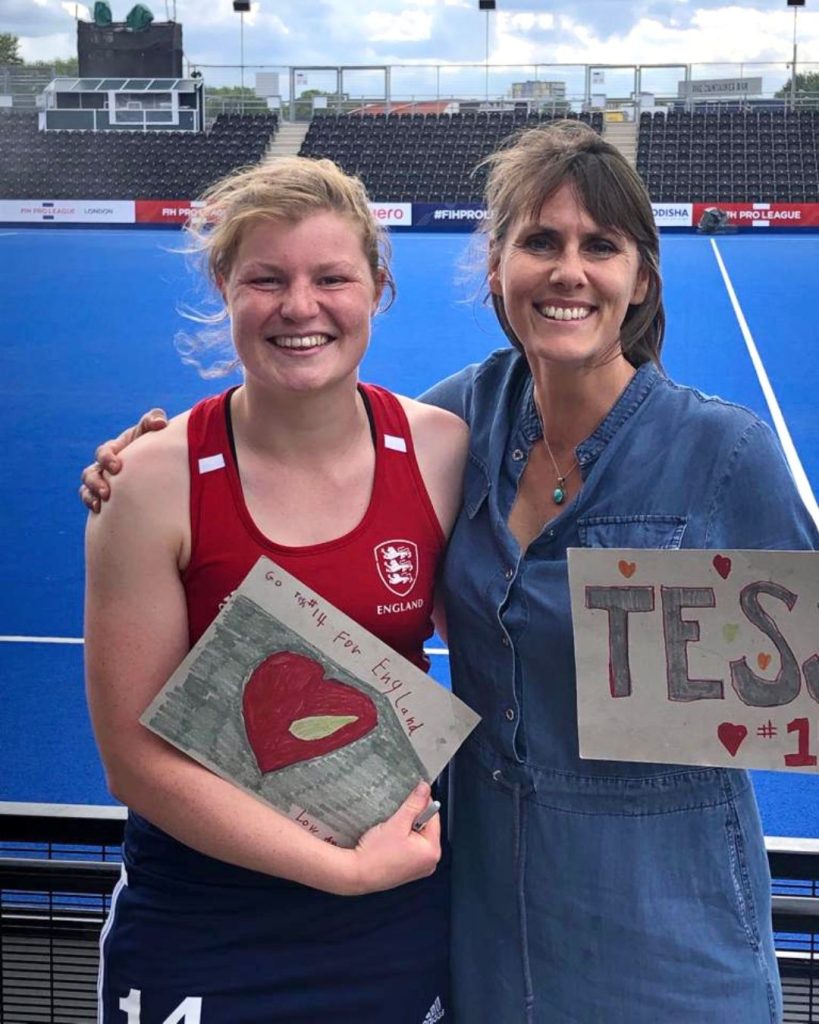
When international field hockey player Tess Howard made her senior debut for Great Britain at nineteen, she expected the intensity, scrutiny and pressure that come with elite sport. What she didn’t expect was how much discomfort and self-consciousness could be created by the one thing that should support performance: sportswear.
“At GB we trained in shorts every day, just like every other team in the world,” she recalls. “But for matches, we had to wear skirts. They were compression, very tight, and the tops were compression tank tops. I didn’t feel like myself, and it started to affect my performance.”
Tess’s discomfort wasn’t only physical. Body image anxieties, which she had never previously experienced, were amplified as her image appeared on TV screens and social media. “The kit was a massive part of that,” she says.
The problem sparked a deeper question around whether this was just a personal issue or whether it was widespread across sports.
From Personal Frustration to Systemic Insight
Tess didn’t just sit on the issue. By the time she entered the first cohort of the Women’s Sport Trust’s Unlocked programme in 2020, she was preparing to begin her undergraduate dissertation at Durham University.
Unlocked exists to empower athletes to use their own platforms, voices, and unique perspectives to create change, while coming together as a collective to shape the future of women’s sport. In Tess’s case, that principle collided with a challenge embedded in the fabric, literally, of sport. She came with a simple but bold ambition: “I want to change uniform policy”.
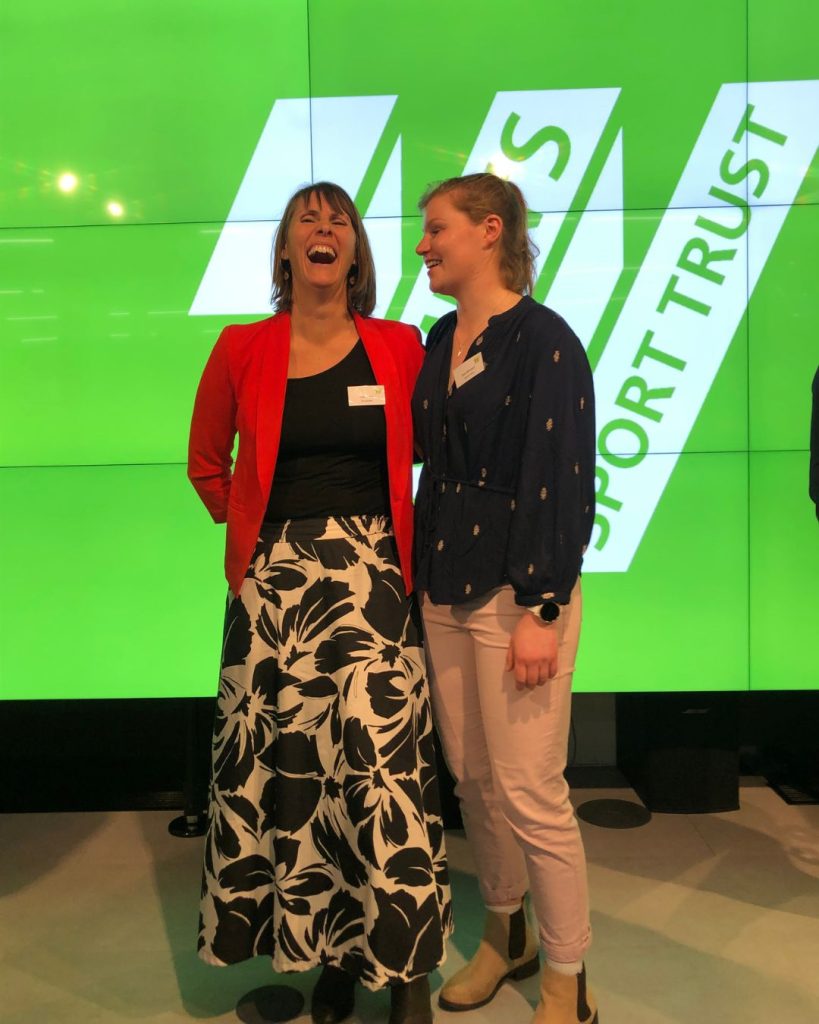
Each Unlocked athlete is paired with an activator, for Tess, that was Suzy Levy, who at the time was a Non-executive director at the Home Office and a Women’s Sport Trust board member. Their mentorship now spans seven years, and their friendship is still fuelled by purpose.
“When we first started talking, Tess was having research-driven conversations about patriarchy, sexualisation and gendered norms going back to Victorian times,” Suzy says.
As part of her undergraduate dissertation, Tess studied the impact of gendered uniform policies on girls’ participation in sport. The findings were stark: 100% of the 400 women surveyed said they wanted choice at school, and 70% had seen girls drop out of sport due to sports kit and body image concerns.
What she found most striking was the variety of reasons driving those drop-outs. “You couldn’t pin it on over-sexualisation or on unisex kit,” she explains. “Everybody had different experiences. The only universal solution was choice.”
But widespread choice didn’t exist. Traditional PE kit policies, fitted polo shirts and skirts for girls, had barely moved on from Victorian expectations of ‘femininity’. “Policies were traditional, rigid, and not designed for participation or enjoyment,” she says. “And participation is the entire point of PE.”
The statistics in the wider system made it clearer still, with Women in Sport finding 64% of girls drop out of sport by 16, and a third of those citing kit as the reason they left. For Tess, that margin was avoidable and indefensible.
Reframing the Issue to Unlock Change
What Tess and Suzy found was that early attempts to communicate the issue publicly fell flat. They were too abstract, too loaded, and too easy to dismiss. Together, they reframed the message. The campaign became about three simple ideas: comfort, choice, shorts. “It was just unarguable,” Suzy says. “Once you strip away the politics, the question becomes why shouldn’t a girl be able to wear a pair of shorts if that keeps her in sport?”
The reframing mattered because it kept the issue inclusive rather than adversarial. It moved beyond hockey. And it made space for something Unlocked encourages, system-level ripple effects. What followed was both highly visible and, at times, quietly difficult.
Tess raised the issue inside the GB team. She worked to bring teammates on the journey, respecting cohesion and performance pressures. The squad wrote to the International Hockey Federation, the rules changed and the team ran out in a combination of shorts and skirts for the first time in 2023.
It sounds simple when written down, but Tess explains, “It was very difficult to even talk to my teammates, let alone ask the national governing body and then wait and see if they would allow it.”
For Suzy, what stood out was how much of the burden sat on the athlete. “Tess was having to do this while keeping her place in the team, maintaining team cohesion, and dealing with an ACL injury and Olympic selection pressures. It shouldn’t be on the athlete alone.”
That sentiment matured into a shared principle, that change should not rely on the individual most affected by the problem. Coaches, national governing bodies, brands, schools and policymakers all have agency and responsibility.
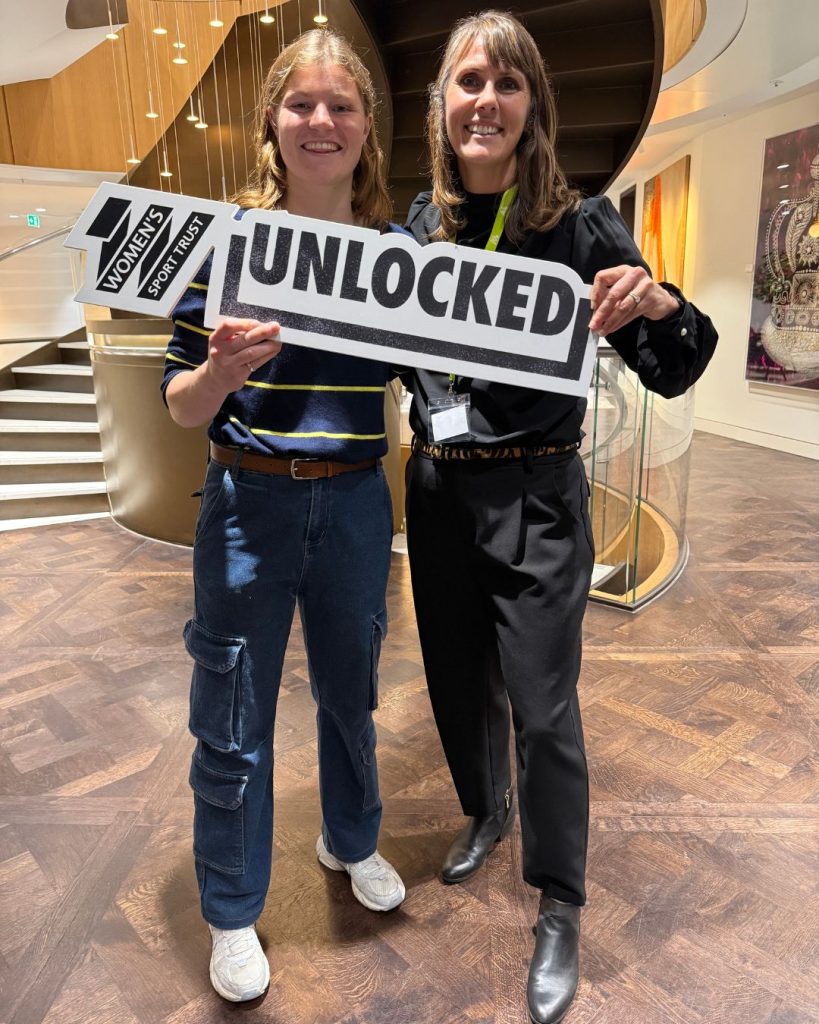
Inclusive Sportswear: Turning Research into Action
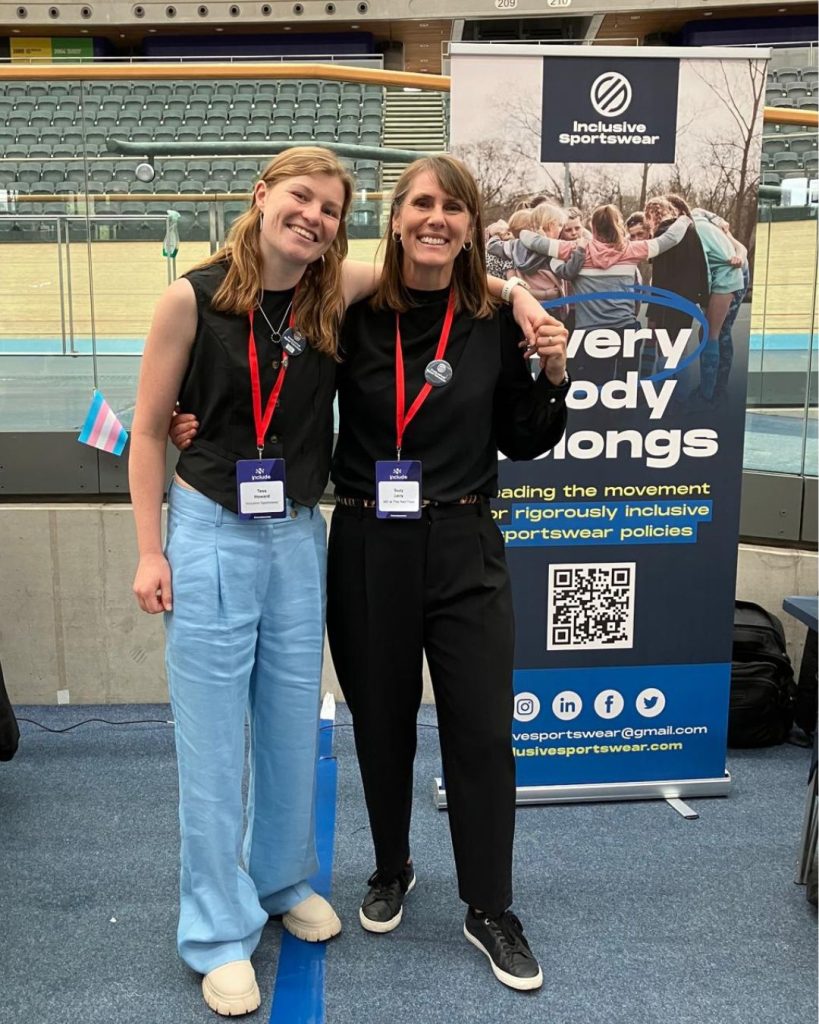
With momentum building, Tess needed a vehicle for lasting change. Together with Suzy, the idea that had surfaced via a mind map on a dinner table became a solution. A Charter.
Inclusive Sportswear was born with a targeted, time-bound mission. Change every sports kit policy to be inclusive so nobody drops out of sport because of kit.
The model links the ecosystem:
- National governing bodies adopt inclusive policy
- Brands develop kit that supports those policies
- Schools upgrade PE kit to reflect inclusion and choice
- Clubs follow suit
- Athletes and parents gain agency rather than relying on personal advocacy
Critically, the charter isn’t theoretical. It is backed by a freely accessible platform supporting schools end-to-end, allowing them to implement inclusive PE kit policies without cost barriers.
Building Momentum: From Pilot to Implementation
Momentum accelerated in 2024 and early 2025. Tess sought advice and collaboration from experts in the field, partnering with Youth Sport Trust, Access Sport and other organisations to build the Inclusive Sportswear Charter, the first standard for sports kit policy based on inclusion.
One of Tess’ exciting projects last year was a collaboration with ASICS to re-design girls’ PE kit based on the Inclusive Sportswear Charter. Co-created with Burnley High School, the project demonstrated that comfortable, smart and choice-based PE kit could work in practice and make a huge difference – with over 75% of girls saying they would enjoy PE more with more comfortable kit.
The campaign’s question became legacy. Tess suggested a parliamentary event to bring the sector together. On Wednesday 14th January, hosted by Baroness Tanni Grey-Thompson (also an Unlocked activator), Inclusive Sportswear entered the system formally, as a solution capable of scaling through policy, brands, clubs and schools.
“Originally, the event was going to push for the Department for Education to update their policy, to include choice and inclusion. But we were so good at campaigning that it happened in November!” Tess explains. So the event became about embedding the change rather than winning it. “It felt like the end of the pilot phase and the start of implementation,” Tess adds.
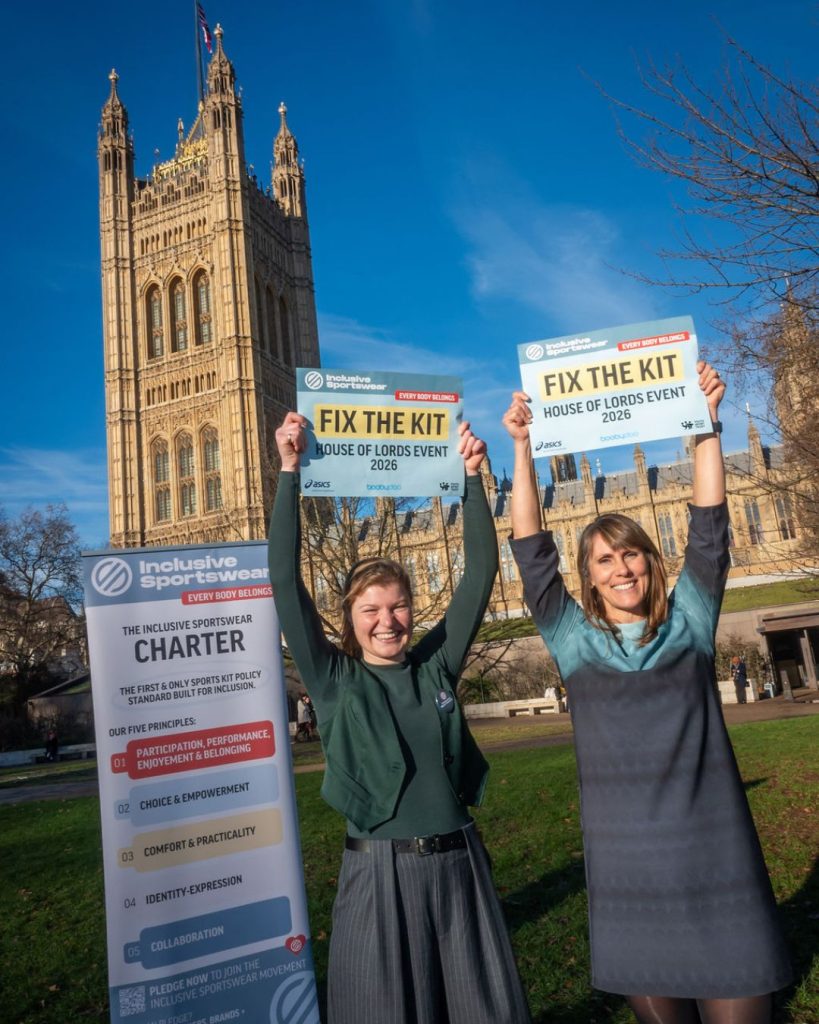
Photo credit: Victoria Wilcox
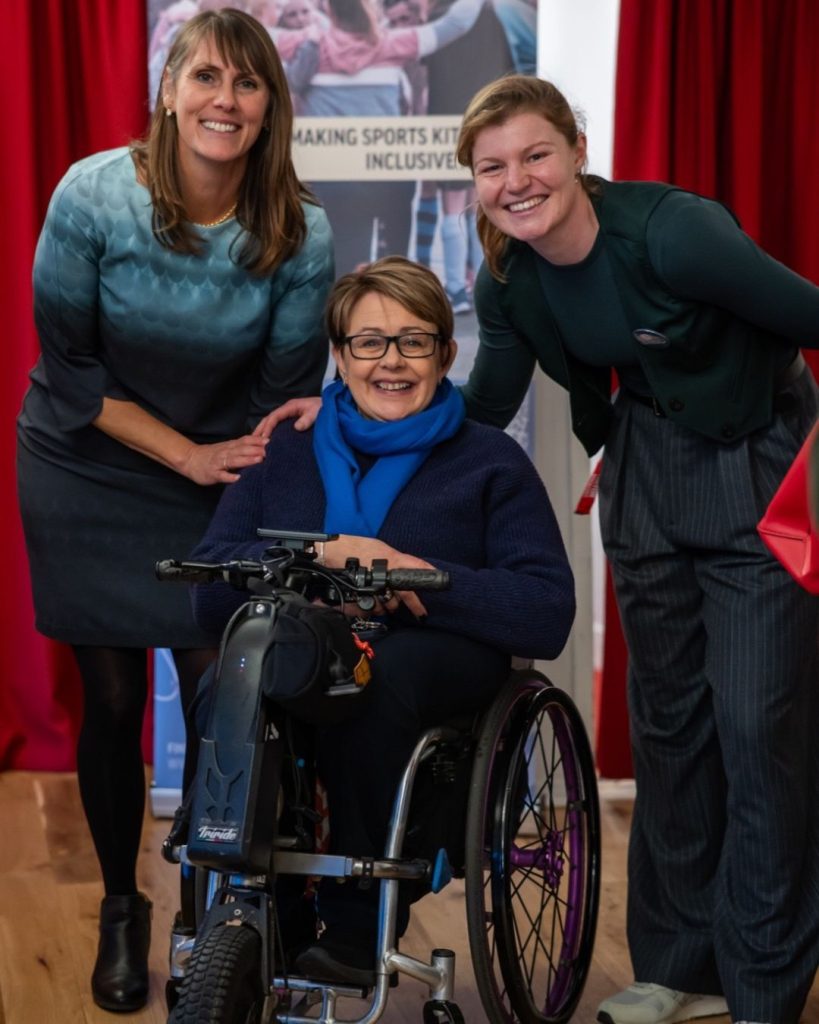
Photo credit: Victoria Wilcox
A Full-Circle Unlocked Story
Women’s Sport Trust’s Unlocked programme was designed to unlock athletes. In Tess’s case, it helped unlock a system.
Her activator pairing with Suzy turned frustration into strategy, strategy into a proposition, and a proposition into an ecosystem for change. It connected elite sport to grassroots. It moved from a GB hockey bench to the House of Lords, and it broadened responsibility from the athlete to the decision-makers around her.
At the event, Tess said, “In three years’ time, I don’t want another athlete to have to do what I just did.”
Call to Action: Sign the Charter
Change now needs adoption. Schools, clubs, governing bodies and brands can all play a role by signing the Inclusive Sportswear Charter.
Because comfort should never be a barrier to participation.
Because choice keeps girls in sport.
And because sport kit should support confidence, not compromise it.
Thanks to a grant from the Jacobs Futura Foundation, the Women’s Sport Trust launched a new Unlocked programme in November 2025. This funding supports not only the latest cohort, but also strengthens our growing community of 111 athlete alumni. Find out more about the Unlocked programme here.