
Welcome to Athlete Voices Unlocked, a new interview series that shines a light on the journeys, insights, and impact of our Unlocked athletes and alumni. Through candid conversations, we explore the many experiences, challenges, and perspectives shaping the world of women’s sport — told in their own words.
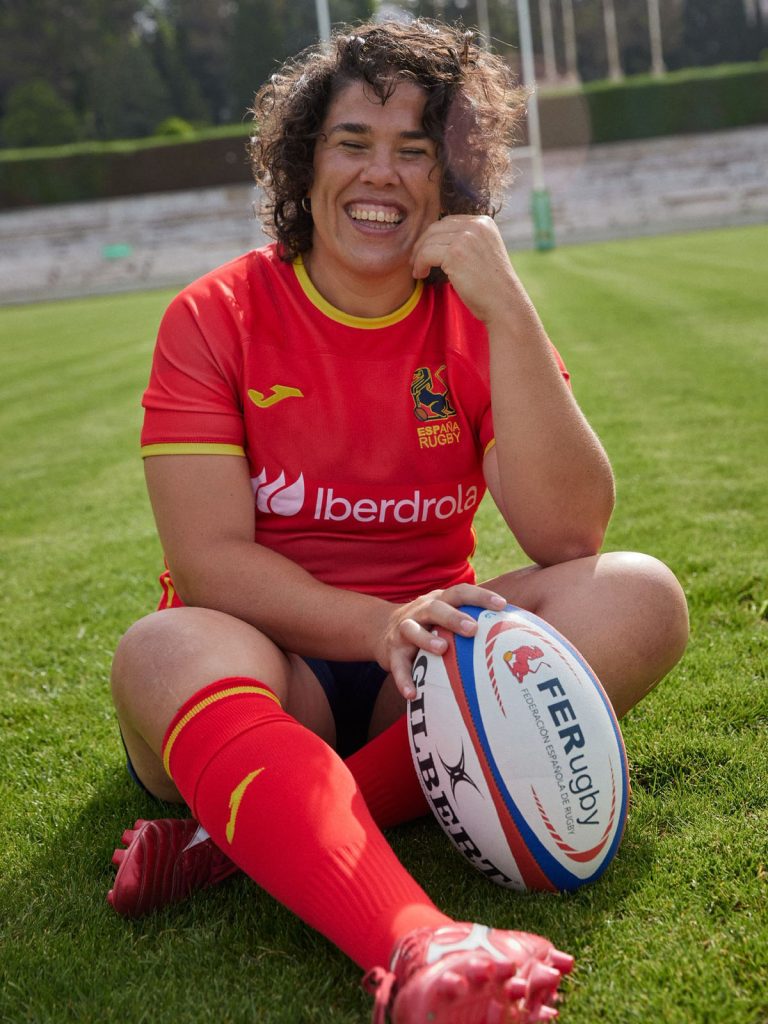
Elite athletes rarely set out to become trailblazers. More often, they are focused simply on competing, improving, and being the best they can be at their sport. Over the course of her career, however, Laura Delgado Dueñas has repeatedly found herself breaking new ground. Whether that be as the first Spanish woman to turn professional, the first to sign a contract in England or the first European to perform a haka with her team in New Zealand. Each of those moments carried weight beyond individual achievement, expanding what felt possible for others coming through the system from Spain.
Now, as she prepares for life beyond the pitch, that sense of responsibility has come into sharper focus, shaping a transition rooted in purpose and a commitment to supporting the next generation.
Finding rugby
Laura Delgado Dueñas, affectionately known as Bimba, did not arrive in rugby by a conventional route. Growing up in the south of Spain, sport was woven into family life. “My parents used to practice athletics. So it’s a culture in my family,” she says. Weekends were spent watching her father race, and as a teenager, she found her own path in athletics, specialising in the hammer throw. National titles followed, and the Olympics felt part of her future.
Then, at 17, everything stopped.
On her way to training, she had a motorbike accident that left her unable to train for almost a year. “I passed from being a very healthy girl… 85 kilos… to 122 kilos,” she recalls. “I didn’t feel good physically, nor mentally.” As well as the injuries taking her out of sport, they stripped away her sense of identity. “I didn’t manage well,” she says honestly. “I lost myself.”
When she was able to return to the gym, she knew athletics was no longer an option. “Mentally, I didn’t want to come back.” A friend suggested rugby. At first, she thought it was American football! But from the very first session, something clicked. “Since the first session, I fell in love with rugby,” she says. “The girls were very welcoming… everyone was trying to support me.”
That unexpected shift would shape everything that followed.
Bimba is born
While completing her university degree, because education always came first, something her parents insisted on, she moved to Madrid to play at a higher level. It was there, nervous in her first big match, that her nickname was born. “They told me, just carry the ball, like you do in training sessions”, she laughs. “People were coming to tackle me and I kept pushing them out of the way, then the crowd started to shout, ‘Bimba, Bimba'”. The name stuck.
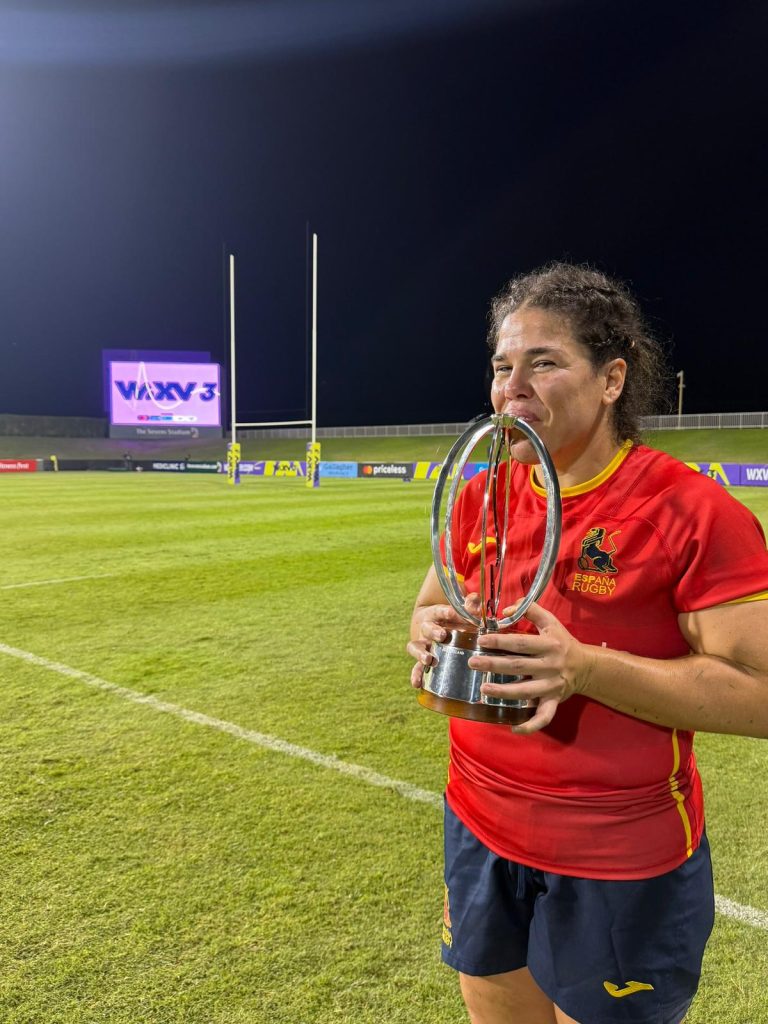
Her career would take her around the world from Spain to France, the USA, England and New Zealand. On the international stage, she captained Spain for seven of her ten years with the national team, Las Leonas (The Lionesses), and competed in some of the world’s best leagues. But for Bimba, those milestones are only part of the story.
“As a Spanish player, I think I always need to show that I’m a good player,” she explains. “In football, if you are Spanish, they think you are good. In rugby, it’s the opposite.” Again and again, she felt she had to prove not just herself, but her country. That sense of responsibility shaped her mindset as both a leader and a role model and began to influence how she thought about life beyond playing.
Preparing to transition
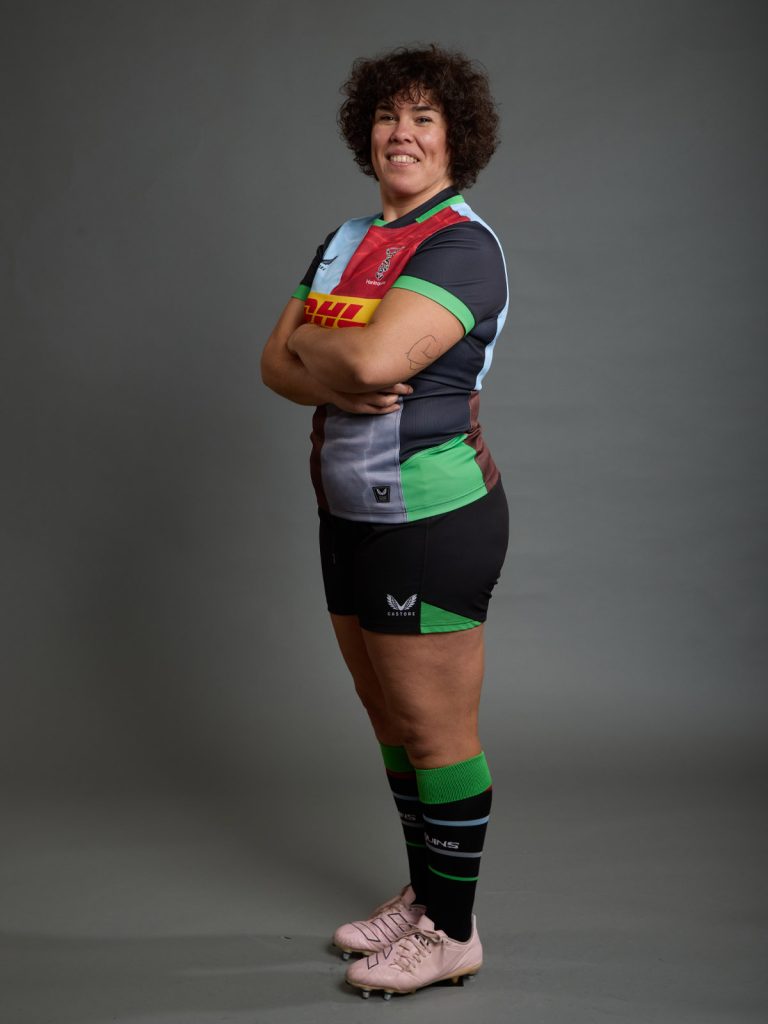
Her move to London two years ago became about more than just rugby. Not in a good place mentally, when Harlequins approached her, their values stood out immediately. “They told me we are humans before players,” she recalls. “That won me.” But the decision was also shaped by what came next. “I was looking for my retirement,” she explains. “London is a great place to explore more out of rugby.”
The move became a deliberate step towards transition, creating space to build a life beyond the game while still competing at the highest level. She even told the club openly that this season would be different. “I told them, this is my transition year. I also want to focus on my next chapter.” Their response reinforced her decision. “Harlequins support me in everything,” she says. “They have supported me a lot.”
That support gave her the confidence to build Rugby Changers alongside her final season. Designed primarily for Spanish-speaking players, the programme mentors young women who aspire to play internationally or professionally abroad. “This project is about mentoring,” she explains. “Girls who want to make the national team or play abroad.”
A Spanish trailblazer
The idea had been forming for years. As one of the first Spanish players to move abroad, sign professionally and compete in leading leagues, she often felt she was clearing a path for others. “I wanted to show my country… that we can make it,” she says. “I have been supporting all the Spanish players who want to play here.”
Now, mentoring around ten players each month from Spain and South America, she is actively shaping the next generation, a shift from leading on the field to leading beyond it. Alongside that, she is increasingly exploring the connection between rugby and business, speaking about teamwork, leadership and culture, and running clinics in Spain to share her experience face-to-face.
Already well into planning her next chapter, joining the Women’s Sport Trust’s Unlocked programme in November has provided an additional space where those instincts are mirrored and strengthened. Whether in group discussions or shared reflection, Bimba is known for championing collective power, reaffirming that progress happens fastest when athletes work together, challenge each other, and support one another.
With her focus shifting from performance to impact, the leadership programme has also helped strengthen and amplify the work she is already doing through Rugby Changers and reinforce the influence she is building beyond the pitch.
The transition has also required deeper personal preparation. “I did a lot of work with my psychologist,” she says. “I have been a rugby player, 24/7, all my adult life.” Stepping away meant acknowledging what the sport had demanded. “I lost a lot of things, like a social life, a normal life. So I knew it was really important to prepare for this.”
Bimba’s last dance
Her international retirement last summer came with its own challenges. She didn’t realise her match against Ireland in the Women’s Rugby World Cup would be her last. “That was tough to process,” she admits. But the reaction that followed shifted her perspective. “I received a lot of calls, texts that I didn’t expect in my life… I felt like the country was behind me.” The support reinforced the impact she had made and helped her close that chapter with pride.
Now, as she approaches her final match for Harlequins, her “last dance”, she feels ready. “I’m ready. I’m excited for my next chapter,” she says. “I have new dreams. I have new goals.”
Recently, watching the next generation of Spanish internationals, she found herself smiling from the stands. “I watched with a smile on my face.” Overall, it was a moment that captured the transition, from player to mentor, from competitor to supporter.
“People tell me, ‘you are my favourite player because you are always smiling,’” she says. For Bimba, that reaction reflects something deeper. “It means that someone can see how rugby makes me happy. And it’s what I want to share with the world.”
Thanks to a grant from the Jacobs Futura Foundation, the Women’s Sport Trust launched a new Unlocked programme in November 2025. This funding supports not only the latest cohort, but also strengthens our growing community of 111 athlete alumni. Find out more about the Unlocked programme here.